


The perception of insecurity in Colima increased in the last quarter of 2025 (September-December), reaching 78.9% of the adult population who consider it unsafe to live in their city. Meanwhile, in Manzanillo, the perception of insecurity was 66.1%, according to the National Urban Public Security Survey by the National Institute of Statistics and Geography (INEGI), released today.
Nationally, the perception of insecurity in Mexico increased in the last quarter of 2025, reaching 63.8% of the adult population who consider it unsafe to live in their city, a significant annual increase compared to the 61.7% recorded in December 2024.
According to this latest 2025 statistic presented by INEGI, 69.4% of women and 57.1% of men stated that it was unsafe to live in their city.
The cities with the highest percentages of the population perceiving the greatest insecurity were Uruapan (88.7%), Culiacán Rosales (88.1%), Ciudad Obregón (88.0%), Ecatepec de Morelos (88.0%), and Irapuato (87.3%).
72.3% of the population reported feeling unsafe at ATMs located on public streets, and 64.9% reported feeling unsafe on the streets.
This survey is conducted quarterly in 91 urban areas across the country. Its purpose is to inform public perceptions of safety and provide data for public policy decisions in this area.
In December 2025, 63.8% of the population aged 18 and over, residing in the 91 urban areas of interest, considered it unsafe to live in their city.
The places where fear is most concentrated are ATMs in public areas, where 72.3 percent feel unsafe, followed by streets and public transportation at 64.9 percent each, and highways at 58.9 percent.
Social expectations reflect this increase, as 59.3 percent of the population believes that insecurity will remain the same or worsen in the next twelve months, with 33.7 percent believing it will remain unchanged and 25.6 percent anticipating a deterioration.
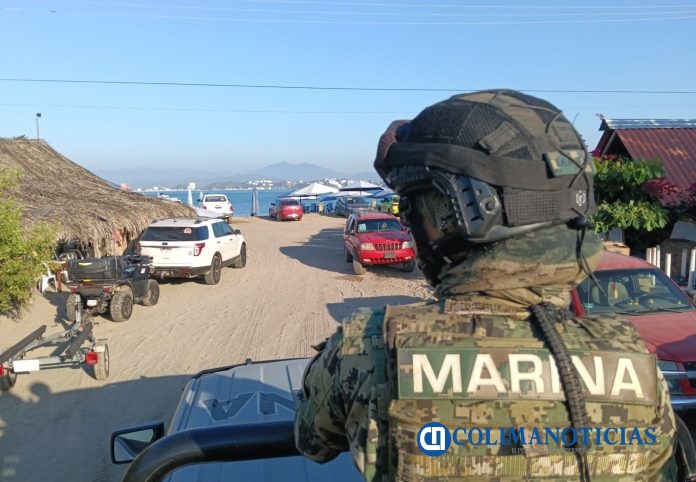
The perception of effectiveness is concentrated in the armed forces, with 83.0 percent considering the Navy very or somewhat effective; 81.4 percent the Mexican Air Force; and 79.7 percent the Army, while the National Guard stands at 70.0 percent, and state and municipal police forces fall to 51.8 and 46.0 percent, respectively.
This distrust is exacerbated by direct experience. Among those who had contact with security authorities, 45.4% reported experiencing at least one act of corruption, a figure that explains why the rise in perceptions cannot be corrected simply by increasing police presence.
The impact extends to households. In the second half of 2025, 32.3% of households had at least one victim of robbery, extortion, or fraud, confirming that crime is a part of daily life in large urban areas of the country.
Source: colimanoticias