


Last January, Colima registered a 14.8% year-on-year growth in its industrial activity, followed by Tamaulipas with 11.3% and Chiapas with 10.3%, according to data from the National Institute of Statistics and Geography (INEGI).
In Colima, the secondary sector advanced thanks to the boost from the port of Manzanillo, explained analyst Kristobal Meléndez. It’s worth noting that the state will receive an investment of 11 billion pesos from the federal government between 2025 and 2026 for highway infrastructure, bridges, roads, and water infrastructure projects.
This is in addition to the port terminal modernization works, which “allowed it to diversify and attract Asian investment.”
Compared to January 2025, the state saw a 30.5% increase in construction and an 18% increase in the generation and transmission of electricity, water, and natural gas.
In the case of Chiapas, there were increases in all four sectors that make up the indicator: mining, energy, construction, and manufacturing. “There is a positive sign, but it shouldn’t be confused with a manufacturing industrialization similar to that of northern Mexico,” explained analyst Héctor Magaña.
The manufacturing potential in the state would be linked to the processing of primary products (agro-industrial goods), “we’re talking about food, beverages, coffee, fruits, processed agricultural products, and goods related to its local production base.”
Chiapas has an agricultural vocation, “so its industrial opportunity likely lies in adding value to these products: processing, packaging, transforming, and connecting them to national or export markets.”
Tamaulipas was the only border state with growth in its industrial activity; analysts agree that its strength lies in the diversification of activities and its geographic location, unlike the other border states whose industrial activity is heavily tied to the manufacturing sector.
Baja California reported a 7.7% year-on-year decline, Sonora 6.7%, Chihuahua 3.9%, Coahuila de Zaragoza 10.4%, and Nuevo León 1.2%.
In January, Tamaulipas was the state that contributed most positively to industrial activity, given its “export-oriented manufacturing of electrical and electronic products, auto parts, medical equipment, and industrial components; it also has energy activity and a key logistical position due to its border crossings, ports, and connection to the U.S. market,” explained Magaña.
National industrial activity fell 1.1%, with the manufacturing sector being the only one to decline, falling 3.0%. This decrease was not offset by growth in construction (4.1%), mining (0.8%), and energy (0.7%).
The states that contributed most to the manufacturing contraction were Coahuila, which fell 12.8% year-on-year, Baja California with 10.9%, the State of Mexico with 6.9%, and Nuevo León with 2.9%. “For the border states, the issue was tariffs. In Coahuila, the automotive industry was affected, and in Baja California, production costs increased due to these tariffs, making it impossible to compete with California in the United States. (…) The State of Mexico weakened due to the domestic market, as it has lost competitiveness and some key inputs, such as water and energy, have increased in price,” explained Meléndez.
Manufacturing began the year with signs of weakness in the country’s industrial engines, “related to less dynamism in certain external orders, inventory adjustments, production pauses, or lower demand in sectors such as transportation equipment, auto parts, electronics, and machinery,” Magaña pointed out.
“The industry continues to be sensitive to the external economic cycle, especially the performance of the United States.” Despite the observed slowdown, “the border region remains highly competitive.”
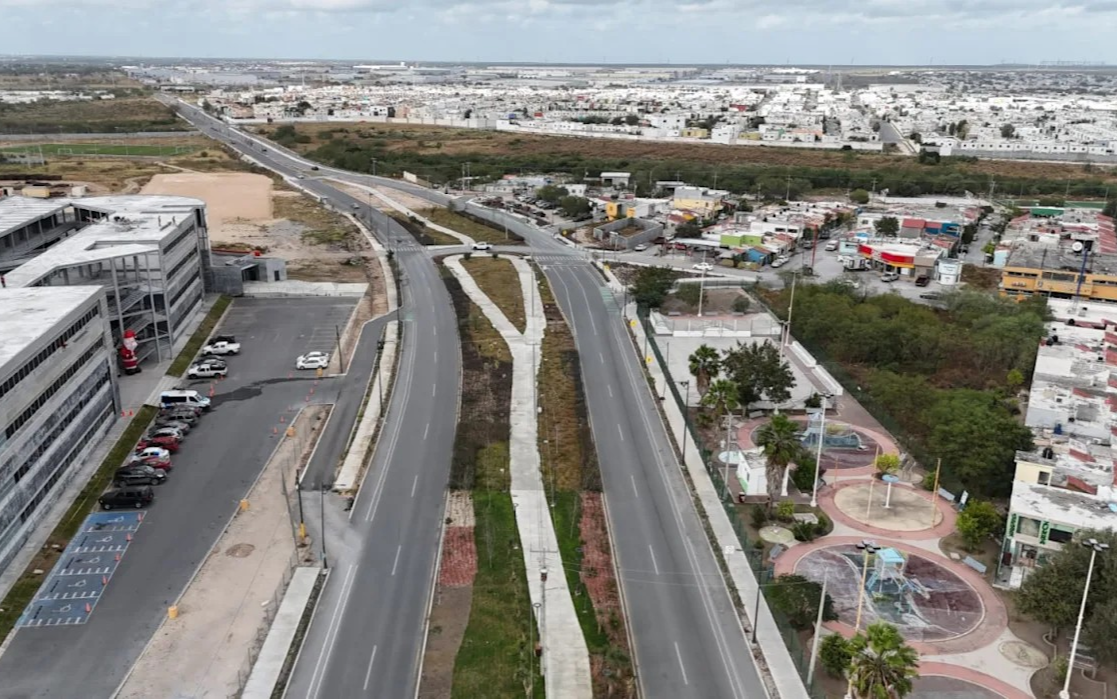
Tamaulipas was the only border state to experience growth in its industrial activity; its strength lies in the diversification of its industries and its geographic location.

Source: es-us.noticias.yahoo